


- About us
- Services
- City To City
- Moving from Toronto to Calgary
- Toronto to Edmonton
- Toronto to Fredericton
- Toronto to Red Deer
- Toronto to Guelph
- Toronto to Halifax
- Toronto to Kelowna
- Toronto to Kitchener
- Toronto to Montreal
- Toronto to Ottawa
- Toronto to Regina
- Toronto to Saskatoon
- Toronto to St John’s
- Toronto to Thunder Bay
- Toronto to Vancouver
- Toronto to Hamilton
- Toronto to Winnipeg
- Toronto to Windsor
- Toronto to London
- Toronto to Pickering
- Toronto to Victoria
- Toronto to Moncton
- Calgary to Moncton
- Calgary to Vancouver
- Calgary to Victoria
- Calgary to Ottawa
- Calgary to Toronto
- Calgary to Edmonton
- Calgary to Montreal
- Calgary to Nanaimo
- Calgary to Surrey
- Montreal to Calgary
- Montreal to Toronto
- Montreal to Vancouver
- Montreal to Moncton
- Ottawa to Vancouver
- Ottawa to Toronto
- Ottawa to Moncton
- Ottawa to Calgary
- Winnipeg to Ottawa
- Winnipeg to Calgary
- Vancouver to Toronto
- Vancouver to Montreal
- Vancouver to Victoria
- Vancouver to Edmonton
- Vancouver to Ottawa
- Vancouver to Calgary
- Vancouver to Winnipeg
- Kingston to Toronto
- Winnipeg to Toronto
- London to Toronto
- Windsor to Toronto
- Hamilton to Toronto
- Kitchener to Toronto
- Edmonton to Toronto
- Edmonton to Calgary
- Edmonton to Vancouver
- Edmonton to Surrey
- Charlottetown to Halifax
- Halifax to Saint John
- Brampton to Calgary
- Surrey to Calgary
- Surrey to Edmonton
- Long Distance
- Province To Province
- Cross Country
- Canada to USA
- Toronto to New York
- Toronto to New Jersey
- Toronto to Washington
- Toronto to Seattle
- Toronto to Chicago
- Toronto to Houston
- Toronto to Phoenix
- Toronto to Florida
- Toronto to Miami
- Toronto to Tampa
- Toronto to Virginia
- Toronto to Atlanta
- Toronto to Boston
- Toronto to California
- Toronto to San Diego
- Toronto to Los Angeles
- Toronto to San Francisco
- Alberta to Texas
- Toronto to Texas
- Toronto to Dallas
- Toronto to Austin
- Toronto to San Jose
- Storage Service
- Car Shipping
- City To City
- Locations
- Promo
- Blog
- Tools & Tips
- Contact Us
The way you organize your belongings before a move directly affects how long the move takes, how much it costs, and how chaotic — or calm — the first week in your new home feels. Professional movers have seen thousands of moves go smoothly and thousands go badly. The difference is almost always preparation. This guide covers exactly how to organize everything before the truck arrives, in the order that actually works.
Step 1: Decide What’s Actually Coming With You
Before you pack a single box, go through every room and make decisions. This is the step most people skip — and it’s the most expensive mistake you can make on a long-distance move. Every item you move costs money. On a cross-Canada route, moving a $150 piece of furniture can cost $100–$200 in transport fees — often cheaper to sell it and buy new at the destination. Use a simple four-category system for everything you own:
- Keep and move — items you genuinely use and need in the new home
- Sell — furniture, electronics, and items in good condition that have value. Facebook Marketplace and Kijiji move items quickly before a move.
- Donate — usable items that won’t sell easily. Goodwill, Salvation Army, and local shelters accept household goods.
- Discard — broken, damaged, or expired items with no value to anyone
Be ruthless. If you haven’t used something in 12 months and feel no attachment to it, it shouldn’t come with you. For long distance moves in particular, every box you eliminate saves real money and real effort at the other end.
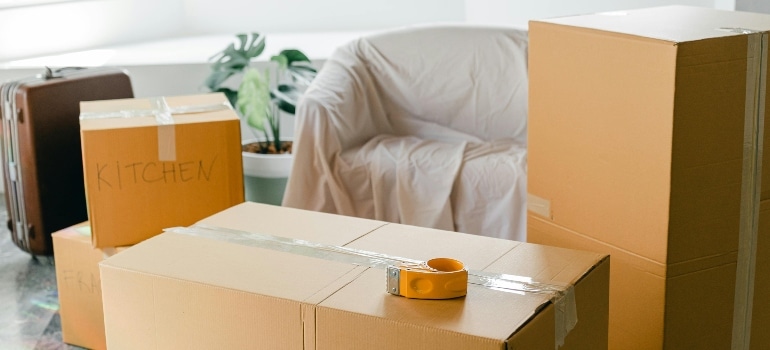
Step 2: Create a Room-by-Room Inventory
Once you know what’s coming, document it. A written inventory serves two purposes: it helps your moving company give you an accurate quote, and it becomes your reference if anything is damaged or missing during transit. Go room by room and list:
- Large furniture items (dimensions help if you’re not sure they’ll fit in the new space)
- Appliances — note whether they need disassembly
- Number of boxes per room (estimate before you start packing)
- Specialty items — piano, artwork, antiques, exercise equipment, safes
Keep this list digital (Google Sheets works well) so you can share it with your moving company for an accurate quote. When getting quotes from Centennial Moving, a detailed inventory is the single most important factor in receiving an accurate binding estimate.
Step 3: Pack in the Right Order
Packing order matters more than most people realize. Pack in this sequence:
Pack first (4–6 weeks before the move)
- Seasonal items — holiday decorations, winter gear (if moving in summer), sports equipment you won’t need before the move
- Books and media — heavy, uniform, easy to box
- Decorative items — artwork, picture frames, vases, knick-knacks
- Extra linens and towels beyond what you’ll use daily
- Items in storage — garage, basement, attic
Pack next (2–3 weeks before)
- Most kitchen items — keep out only what you’ll use in the last week
- Clothing you won’t wear before the move
- Books and office supplies
- Non-essential bathroom items
Pack last (final week)
- Daily kitchen items — plates, cutlery, one pot and pan
- Everyday clothing
- Toiletries
- Electronics you’re using daily — laptop, phone chargers
- Bedding (pack the morning of moving day)
Never put on the truck
- Important documents — passport, birth certificates, financial records, lease/mortgage documents
- Medications and prescriptions
- Valuables — jewelry, irreplaceable items
- Phone chargers and devices you need during transit
- Cash and payment methods for moving day
Step 4: Box and Label Everything Properly
How you pack boxes is as important as what goes in them. Poorly packed boxes damage contents and create problems for movers who need to stack and secure them in the truck.
Box weight rules
- Small boxes (1.5 cubic ft): Books, canned goods, tools — anything heavy. Keep under 20 kg.
- Medium boxes (3 cubic ft): Kitchen items, toys, clothing — general household. Keep under 15 kg.
- Large boxes (4.5 cubic ft): Pillows, comforters, light bulky items only. Never fill large boxes with heavy items — they’ll break and injure someone.
- Wardrobe boxes: Hanging clothing — worth renting from your moving company for a smooth transfer.
Labeling system that actually works
Label every box with:
- Destination room in large letters on at least two sides — this lets movers place boxes directly without asking you each time
- Contents summary — “Kitchen — plates, glasses” not just “Kitchen”
- Fragile — on all four sides if applicable, with arrows indicating which side is up
- Open First — for boxes you’ll need immediately in the new home
Color-coding with tape or stickers by room (blue for bedroom, red for kitchen, etc.) speeds up unloading significantly — movers can place boxes in the right rooms without reading labels.
Step 5: Handle Furniture and Large Items
Large furniture is where most move-day delays and damages happen. The key is preparation before the truck arrives:
- Disassemble what you can — bed frames, IKEA furniture, large shelving units. Keep all hardware in labeled zip-lock bags taped to the piece they belong to.
- Measure doorways — particularly in old homes. A sofa that fit through the original door may not fit through the new one. Measure both ends before moving day.
- Wrap furniture surfaces — moving blankets protect furniture in transit. Your moving company will bring these, but you can also wrap items yourself in advance for extra protection.
- Defrost the fridge/freezer — 24–48 hours before pickup. A refrigerator loaded with ice can leak and damage other items in transit.
- Empty and drain washing machines — secure the drum with transit bolts if you still have them.
For specialty items — pianos, pool tables, large safes, antiques — tell your moving company in advance. These require special equipment and handling, and disclosing them upfront ensures the right crew and equipment shows up.

Wrap furniture securely to prevent damage.
Step 6: Prepare an “Open First” Box for Each Room
This is the single most useful thing you can do for the first night in your new home. Pack one box per key room that contains everything you need in the first 24–48 hours without unpacking everything else: Bedroom open-first box: Fresh bedding, pillow, alarm clock, phone charger, one change of clothes, toiletries Kitchen open-first box: Coffee maker, coffee, one mug, basic cutlery, one plate, paper towels, dish soap, sponge Bathroom open-first box: Toilet paper, hand soap, towel, shower curtain and rings (if not already installed), basic toiletries Documents box (keep with you, not on truck): IDs, lease/purchase documents, moving company contract, insurance documents, medications, valuables Label these boxes clearly and tell your movers they are “open first” — they should come off the truck last so they’re the first thing accessible in your new home.
Step 7: Prepare for Moving Day Itself
Even with perfect packing, moving day can go sideways without preparation. Here’s what to have ready:
- Clear pathways — remove rugs that could trip movers, prop open doors, reserve elevator time in advance if you’re in an apartment building
- Reserve parking — confirm the moving truck can park close to the entrance. For downtown locations, you may need a city parking permit. Long-carry fees apply when the truck has to park more than 75 feet from the entrance — budget $1–$2/foot for anything beyond that.
- Have payment ready — know your moving company’s payment method (credit card, e-transfer, certified cheque) and have it accessible on delivery day
- Do a final walkthrough — every room, every closet, every drawer before you sign off that the property is clear
- Photograph everything — the old home’s condition before you leave, and any pre-existing damage in the new home before the truck unloads. This protects your damage deposit at both ends.
For a complete checklist covering everything from 8 weeks out to moving day itself, see our printable moving checklist. When you’re ready to book, get a free quote from Centennial Moving — we’ll have an estimate ready within 24 hours.
Frequently Asked Questions
How far in advance should I start organizing for a move?
For a local move, 4–6 weeks is sufficient. For a long-distance or cross-Canada move, start 8–10 weeks out — particularly for decluttering and selling items, which takes longer than most people expect. The packing itself typically takes 2–3 weeks for an average 2–3 bedroom home when done alongside daily life.
What should I get rid of before moving?
Anything you haven’t used in 12 months and feel no attachment to. Focus on: duplicate kitchen items, old clothing that no longer fits, furniture that won’t suit the new space, books you’ve already read and won’t reread, and anything broken or damaged. On a long-distance move, every item eliminated saves money and effort.
How should I label moving boxes?
Write the destination room on at least two sides in large letters, add a brief contents description, and mark fragile items clearly on all four sides with upward arrows. Color-code by room using tape or stickers for faster unloading. Create an “open first” label for boxes you’ll need in the first 24 hours. Number boxes and keep a master list if you want to track everything precisely.
Should I pack my own boxes or hire professional packers?
Packing yourself saves money ($300–$800+ depending on home size) but takes significantly more time than most people expect — a 2-bedroom apartment typically takes 15–25 hours to pack properly. Professional packers are faster, use better materials, and items they pack are typically better covered by moving insurance. A hybrid approach (pack your own clothing and books, have movers handle fragile items and furniture) is a popular middle ground.
What items should never go on the moving truck?
Keep with you at all times: important documents (passport, birth certificate, financial records, lease documents), medications and prescriptions, irreplaceable items and valuables (jewelry, family heirlooms), phone chargers and devices you need during transit, and payment for the movers. These should travel in your personal vehicle or carry-on, not the moving truck.
How do I organize furniture for a long-distance move?
Disassemble what you can before moving day — bed frames, large shelving units, IKEA furniture. Store all hardware in labeled zip-lock bags taped to the piece. Measure furniture against doorways at both the old and new home. Defrost the fridge 24–48 hours before pickup. Tell your mover about specialty items (pianos, safes, pool tables, antiques) in advance so they bring the right equipment.
Services
Testimonials
Centennial Moving
Jitin UnOfficial
5

Thank you very much. The price was the cheapest in the market and the service was the best. Really helpful to their team.
September 17, 2025
Centennial Moving
Mohamed Roshdy
5
Very professional and helpful. Highly recommended
September 2, 2025

